
Chassis Flusher vs Underbody Blaster: What's the Difference?
A chassis flusher and an underbody blaster might sound like they do the same job, but they clean two very different parts of your 4WD.
A chassis flusher cleans inside hollow chassis rails, while an underbody blaster cleans the exposed surfaces underneath your vehicle. Both help remove trapped salt, sand, mud and road grime, but one cannot completely replace the other.
If you regularly drive on beaches, tackle muddy tracks or head off-road, understanding the difference can help you build a more effective 4WD cleaning routine.
The easiest way to remember it? A chassis flusher cleans inside. An underbody blaster cleans underneath.
What Does a Chassis Flusher Clean?

A chassis flusher is designed to clean inside the hollow chassis rails and accessible internal sections of your 4WD.
These areas can collect sand, mud, salt and dirty water through existing openings and drain points. Because the build-up sits inside the chassis, simply spraying the outside of your vehicle will not remove it.
A chassis flusher directs water into these internal areas, helping move loose dirt, sand and salt deposits towards available drainage points.
The Salt Shift 4x4 Magnetic Chassis Flusher features six water jets that spray in multiple directions inside accessible chassis rails. It connects to a standard garden hose, making it an easy addition to your post-trip cleaning routine.
When is a chassis flusher useful?
- After beach driving or saltwater exposure
- When fine sand or mud collects inside chassis rails
- After driving through muddy tracks or red dirt
- When dirty water drains from internal chassis openings
- As part of regular chassis maintenance
What Does an Underbody Blaster Clean?

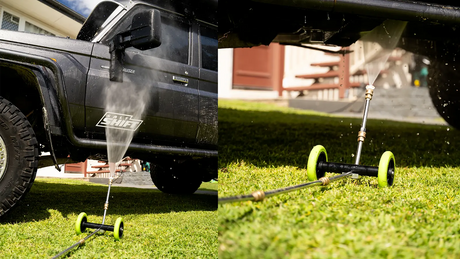
An underbody blaster is designed to clean exposed surfaces underneath your 4WD, including areas that can be difficult to reach with a standard pressure washer wand.
Depending on your vehicle, these areas can include:
- Bash plates and crossmembers
- Suspension components
- Driveshafts and surrounding areas
- Outer chassis rails
- Wheel arches and guards
Unlike a chassis flusher, an underbody blaster works across the outside of these components rather than flushing through internal chassis cavities.
The Salt Shift Underbody Blaster Off-Road connects to a compatible pressure washer and uses a concentrated, adjustable jet to clean hard-to-reach areas underneath your vehicle.
Its wheeled design helps you move the cleaning head beneath your 4WD, while interchangeable nozzles allow you to adjust the spray pattern for different cleaning jobs.
It's particularly useful after muddy tracks, beach driving or trips where the underside of your vehicle has collected a significant amount of grime.
Chassis Flusher vs Underbody Blaster: Key Differences
| Feature | Chassis Flusher | Underbody Blaster |
|---|---|---|
| Cleaning area | Inside accessible chassis rails | Exposed underbody surfaces |
| Main purpose | Flush internal salt, sand and mud | Remove external mud, salt and road grime |
| Water source | Garden hose | Compatible pressure washer |
| Cleaning method | Internal multidirectional flushing | Concentrated upward spray |
| Best used after | Beach driving, muddy tracks and internal build-up | Beach driving, heavy mud and general off-roading |
| Can replace the other? | No | No |
The main difference is internal access versus external cleaning coverage.
A chassis flusher helps reach places you cannot see, while an underbody blaster helps clean the exposed components you cannot easily reach.
For a more complete clean, many 4WD owners will benefit from using both.
When Should You Use a Chassis Flusher?
A chassis flusher should be a priority when contamination may have entered the internal chassis rails.
For example, after driving along the beach, sand and salt-laden water can enter openings in your chassis. Over time, residue can remain in areas that are difficult to access through normal washing.
Flushing these sections helps move loose contaminants out before they continue building up.
It is particularly useful if you:
- Regularly drive on beaches or through coastal conditions
- Notice sand or muddy runoff coming from chassis openings
- Frequently tackle muddy tracks or dusty off-road conditions
- Want a repeatable cleaning routine after each trip
Before flushing, check your vehicle's chassis design and identify suitable access and drainage points. Avoid directing water towards vulnerable electrical components or areas where water cannot drain properly.
When Should You Use an Underbody Blaster?
An underbody blaster is most useful when the outside of your vehicle's undercarriage needs attention.
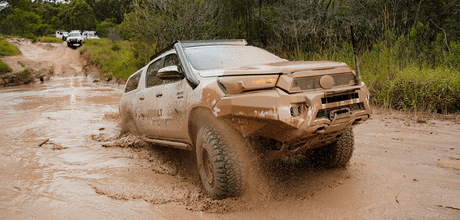
After a muddy track, you might find thick mud sitting around your bash plates, suspension and chassis. Even after washing the body, these areas can remain covered in dirt.
An underbody blaster lets you direct water upwards and work along the underside without relying entirely on a handheld pressure washer wand.
It's particularly useful when:
- The underbody is covered in mud or road grime
- You need to clean around bash plates and suspension
- You regularly drive on sandy beaches
- You want to clean underneath a caravan, trailer or 4WD
- Your normal wash setup struggles to reach exposed underbody components
Keep the spray moving and avoid directing high-pressure water at sensitive electrical connections, seals, bearings or damaged coatings.
Why Many 4WD Owners Use Both
Your chassis rails and underbody are exposed to different types of build-up, which is why using both tools can make sense.
A chassis flusher helps remove contamination from inside accessible rails, while an underbody blaster cleans the external surfaces surrounding them.
Think of it this way:
Your underbody might look clean after a thorough wash, but that does not necessarily mean the inside of your chassis rails is clear.
Likewise, flushing the chassis does not automatically remove mud packed around your suspension or bash plates.
Cleaning both areas gives you a more complete maintenance routine, particularly after coastal or off-road trips.
How to Clean Your Chassis and Underbody After a 4WD Trip
You don't need a complicated routine to keep your 4WD clean after an adventure. A consistent process makes the job easier and helps stop salt, sand and mud from being overlooked.
Step 1: Flush Your Chassis Rails
Start by identifying suitable openings in your chassis.
Connect your chassis flusher to a garden hose and work through accessible chassis sections, allowing dirty water and loose contamination to drain from existing openings.
Move methodically along the rails and repeat where necessary until the runoff is visibly clearer.
Step 2: Clean the Underbody
Next, connect your underbody blaster to a compatible pressure washer.
Work underneath the vehicle using controlled, overlapping passes, focusing on accessible external areas where mud, salt and grime can collect.
Avoid directing concentrated pressure at sensitive components.
Step 3: Wash the Exterior
Once the underbody has been cleaned, wash the exterior using a suitable vehicle wash.
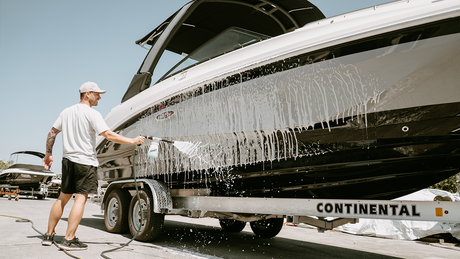
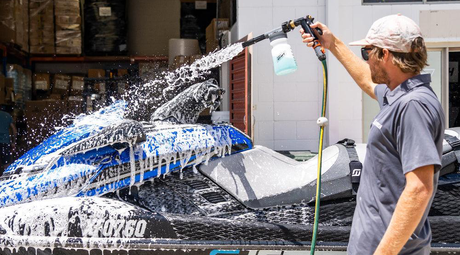
The Salt Shift 4x4 & Caravan Wash is designed for removing salt, mud and grime from your vehicle's exterior surfaces.
Working from the chassis and underbody to the exterior also helps avoid dirty runoff landing on panels you've already cleaned.
Step 4: Rinse and Inspect
Finish with a thorough rinse, check that chassis drain points are clear, and allow the vehicle to dry.
Pay particular attention to areas where moisture or dirt may remain trapped.
For heavily exposed vehicles, you can also follow your cleaning routine with a suitable protective treatment once the surfaces are properly prepared and dry.
Pressure Washer or Garden Hose: Which Do You Need?
One of the biggest differences between these two Salt Shift tools is their water connection.
The Magnetic Chassis Flusher works with a standard garden hose. Its six jets direct water inside accessible chassis rails without requiring a pressure washer.
The Underbody Blaster Off-Road requires a compatible pressure washer. Its concentrated jet provides the cleaning force needed to remove built-up grime from exposed underbody surfaces.
If you only have a garden hose, a chassis flusher may be the more accessible starting point for internal rail cleaning.
If you already own a compatible pressure washer and want better access underneath your 4WD, an underbody blaster is a useful addition.
Always check the equipment specifications, adaptors and your vehicle's clearances before using either tool.
Where Salt Shift Can Help
If you're looking to improve your post-trip cleaning routine, Salt Shift has options for both internal chassis flushing and external underbody cleaning.
The 4x4 Magnetic Chassis Flusher is designed to flush salt, sand and mud from inside accessible chassis rails using a standard garden hose.
The Underbody Blaster Off-Road connects to a compatible pressure washer to clean exposed underbody components and hard-to-reach areas.
For heavier build-up, the Undercarriage & Chassis Wash can be used with Salt Shift's flushing and underbody cleaning systems to help break down stubborn salt, mud and road grime.
If you're after a complete cleaning setup, the Ultimate Off-Road Wash Kit combines chassis flushing, underbody cleaning and exterior washing equipment.
The right setup depends on your vehicle, where you drive and the areas you're trying to clean.
Frequently Asked Questions
Can an underbody blaster clean inside chassis rails?
No. An underbody blaster is designed to clean exposed underbody surfaces. A chassis flusher is designed to direct water into accessible internal chassis rails and cavities.
Can you use a chassis flusher to remove mud?
Yes. A chassis flusher can help remove loose mud and dirt from inside accessible chassis sections. Heavy external mud should be removed separately, and drainage points should be checked for blockages.
Do you need both a chassis flusher and an underbody blaster?
Not necessarily. If you mainly need to clean internal chassis rails, a chassis flusher may be enough for that job. If you're dealing with exposed mud and grime underneath your vehicle, an underbody blaster is more suitable. Using both provides more complete cleaning coverage.
How often should you clean your 4WD chassis and underbody?
A good approach is to clean after exposure to saltwater, beach sand or heavy mud rather than relying on a fixed schedule. For everyday driving, inspect the underside regularly and clean according to conditions.
Will flushing your chassis prevent rust?
Removing salt, mud and other contaminants can help reduce conditions that contribute to corrosion, but flushing alone cannot guarantee rust prevention. Regular cleaning, inspection and appropriate protective treatments all play a role in long-term vehicle care.
Can you use a chassis flusher without a pressure washer?
Yes. The Salt Shift Magnetic Chassis Flusher connects to a standard garden hose, so you do not need a pressure washer to flush accessible chassis rails.
The Bottom Line
A chassis flusher and an underbody blaster aren't competing tools. They simply clean different areas of your 4WD.
Use a chassis flusher for internal chassis rails and an underbody blaster for exposed underbody surfaces.
If your 4WD regularly sees the beach, muddy tracks or coastal conditions, using both as part of your maintenance routine can help you clean the areas that a normal exterior wash might miss.
Because looking after your 4WD isn't just about keeping it clean on the outside. It's about taking care of what's underneath, too.